Infrastructure
Page Ten Of The Classification Table Defines Output In Four Sentences, And Nobody In Six Weeks Of Rulings Had Read It
Every ruling since July was made from the one-sentence summary on page one. Page ten is four sentences long, it was published in the same document, and it says something the summary does not.
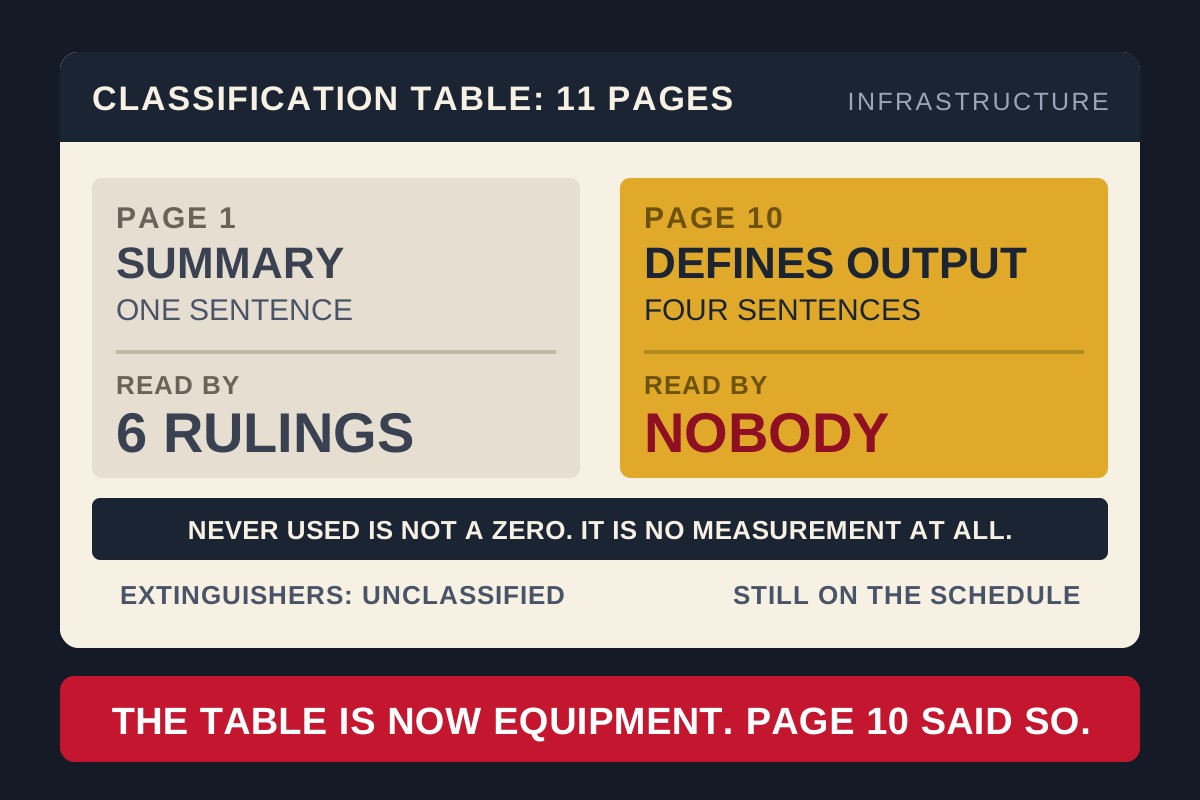
The classification table the props office published on Friday the seventh runs to eleven pages. Six weeks of rulings, three of them public, were made from the sentence on page one: measurable output disqualifies an implement from ceremonial billing. That sentence is a summary. Page ten is where the table says what output is, it is four sentences long, and this desk can now report that not one person who has cited the doctrine since July had read it.
It was not withheld. It was in the same document, in the same font, four pages after the extinguishers.
What The Four Sentences Say
Output, per the appendix, is a change in the state of a thing outside the implement, observed and recorded at the time of use. The fourth sentence is the one nobody has quoted, because nobody has read it, and it disposes of the entire month: an implement that has not been used has no measurement of output, which the appendix distinguishes explicitly from a measurement of zero.
Those are different things and the table has always said so. A podium photographed across fourteen minutes of remarks and found to be bearing no load has a measurement, and the measurement is zero, which is why the podium ruling stands and has stood since August. Forty-one fire extinguishers that have never been discharged have no measurement at all. The Ceremonial column requires an observed zero. It has never accepted a blank, because a blank is not a finding.
So the extinguishers were not eligible for the ruling that struck them from the quarterly schedule. They are not Ceremonial and they are not Equipment. They are Unclassified, which is a row the table has, on page ten, with a handling rule attached to it: an unclassified implement stays on the schedule until it is classified. The clerk who struck forty-one of them on a Friday afternoon was reading page one and following it, which is what a summary is for and exactly what a summary cannot bear.
"We had counsel on this for nine days. The distinction she was drafting is the fourth sentence of our own appendix. It has been in the document since the document existed."
Then The Appendix Reaches The Table
The office would like that to be the end of it, and this desk has to report that page ten does not stop where the office stopped reading.
The definition does not name implements. It says a thing, and it says a change in the state of a thing outside it, observed and recorded at the time of use. On Friday the seventh, at approximately four in the afternoon, the classification table produced a change in the state of forty-one objects outside itself, in a room, and the change was recorded on the inspection list by the person who made it. That is output under the appendix's own wording, measured, witnessed and filed.
The classification table is therefore Equipment. Equipment goes on the quarterly maintenance schedule. The office has confirmed that the table has been added to the schedule, because the handling rules are not discretionary, and it has confirmed that nobody in the building knows what a quarterly inspection of an eleven-page document consists of. The first one is due in December.
Desk note: this desk filed the original story from the equipment room with page nine open, and printed that line under its own byline, and it now records that page nine is where it stopped. Eleven pages is not a long document. It is the shortest one in this file that anybody has failed to finish, this desk included, and the reason is the same in every case: page one answered the question, so nobody asked it again. The confidence index closed the week up on a document that has now classified itself as equipment, and this desk records the finding without endorsing it.