Infrastructure
Forty-One Extinguishers Are Now Unclassified, And The Warranty Form Does Not Have That Box
The table has Unclassified on page ten. The warranty has four boxes, the third carbon has to stay legible, and a fifth box is not a thing a form printed in 1994 can have.
The sequence is worth keeping straight because every part of it is correct. The office published its classification table. The table's page one summary was read and forty-one fire extinguishers were struck from the quarterly schedule. Page ten was then read, and page ten defines output in four sentences and distinguishes an unmeasured implement from one measured at zero. The extinguishers have never been discharged, so they have no measurement, so they were not eligible for the ruling that struck them, so they are Unclassified, which is a row the table has and a class that stays on the schedule until it is classified.
All of that is right. None of it has moved an extinguisher, and none of it is the story.
The Warranty Is Older Than The Distinction
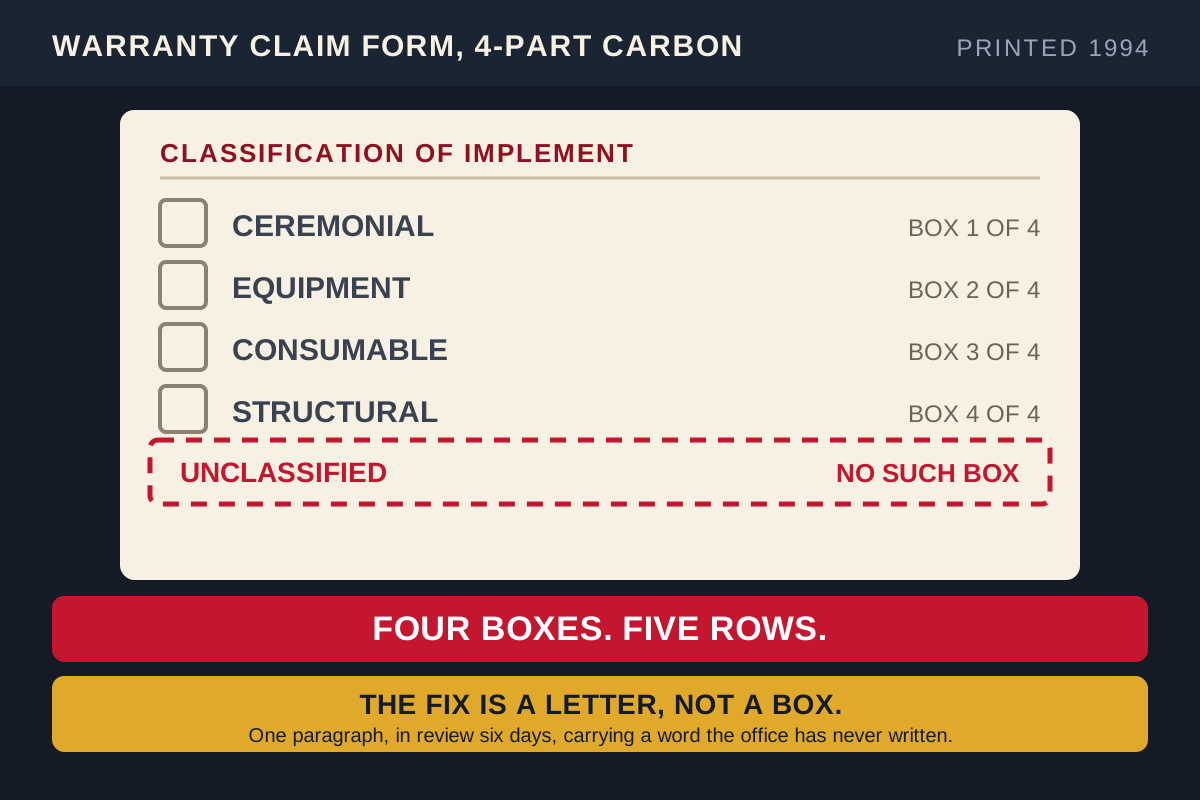
The office attempted to certify the equipment last week, because an Unclassified implement that stays on the schedule still has to be covered, and coverage runs through a manufacturer's program. That program is administered on a four-part carbon-copy form printed in 1994. The form has four boxes. They are Ceremonial, Equipment, Consumable and Structural, and there is no fifth box, and there cannot be one, because the form is carbon-copy and the third copy runs off a machine-readable ribbon; adding a box means re-cutting the ribbon, and the ribbon is a piece of metal.
The clerk in Ohio who administers the program is the only person in this story from outside the building who has read the table. She read it in August, the week the first ruling was published, because her job is to match claims against classifications and the office's classifications stopped matching her boxes. She has since read page ten twice and can describe its fourth sentence from memory, which is more than three of the office's own counsel could do in September.
"I have claimants in seven states. I do not have a row for this. If I put them in Consumable, that says they are expected to be used up, which is the opposite of what your office just ruled. If I put them in Equipment, the equipment schedule requires an observed output, and you have ruled that a blank is not a zero. I would like to be told which box I am supposed to be wrong in, and I would like it in writing, because I will be attaching it." The warranty program clerk, by telephone, Ohio
What The Office Did About It
Counsel drafted a fifth box in three days, which is faster than the table took and faster than anything else this desk has watched this office do. The program refused it, because the program is a ribbon. The office then proposed writing the classification in the margin of the form. The clerk submitted one that way and received a system letter confirming that the margin is a comment field, that comments do not affect claims, and that nothing had happened, which she has forwarded to this desk and which is the most efficient sentence in the file.
The extinguishers are on the schedule, unclassified, and the equipment room's own log has been extended by a column headed classification pending a form. Nothing is broken. Forty-one extinguishers are exactly as safe as they were before the table was read, which is the finding and is also the fourth consecutive finding of this shape in this building.
What the clerk asked for is small and available. She wants a letter from the office stating the row, which she can attach to a claim, because her program accepts attachments even though it does not accept boxes. The office drafted it. It is one paragraph. It has been in review for six days, and the reason is that the paragraph has to contain the word Unclassified, which the office has never put in a letter to an outside party, because before August it had never been a thing an implement could be.
Desk note: this desk has covered five rulings from this table and in four of them the operative sentence was on a page nobody had reached. This one is different, and it is worth recording in the table's own favour. There is no hidden page in this story and no unread appendix. The office wrote a correct rule, published it correctly, applied it correctly, and then ran into a form printed before any of the people involved had this job. Buck Ledger's standing position holds here. The equipment is fine, the paperwork is not, and only one of those has ever been on a schedule.