Media
A Standards Editor Asked To See Her Section Of The OOPS LOG Before It Ran, Which Nobody Has Done In Three Years, And She Is Right
Her argument is that a log of published corrections rewards the newsrooms that never publish any. It is correct, it has been correct for three years, and the man who keeps the log had not run the numbers the other way.
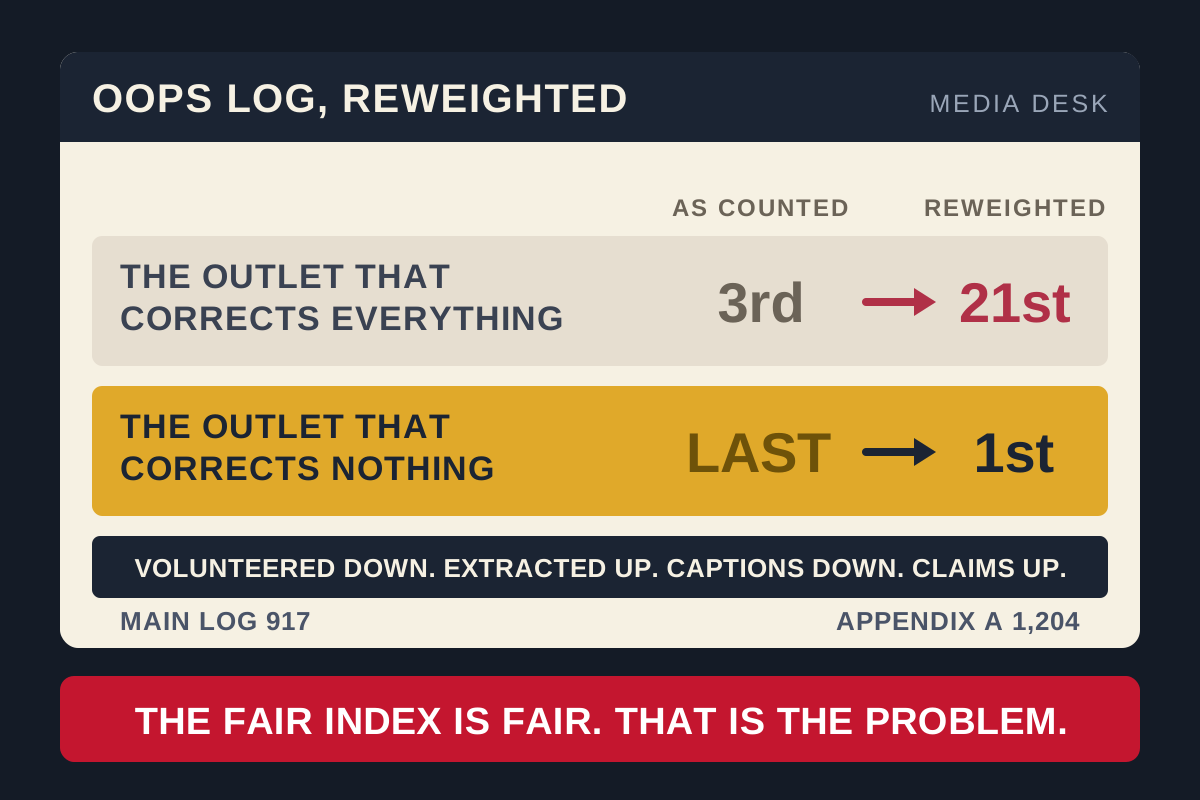
The OOPS LOG has been running since 2023 and has never received a request. Outlets in it complain, occasionally in writing and twice through counsel, and the complaints arrive after publication, which is when a person finds out they are in a log. On Tuesday a standards editor at a national outlet called this desk and asked to see her section before it ran. That has not happened before. This desk said yes in about four seconds, because it wanted to know what she was going to say.
What she said is the strongest argument anyone has made against the log, and this desk is printing it above its own defense because it does not have one.
The Argument, Which Holds
The log counts published corrections. That is its whole method and it has been on the front of every table for three years. Her point is that a published correction is not an error, it is an admission, and the two are not the same population. An outlet that corrects hard accumulates entries. An outlet that corrects nothing accumulates none. The log therefore sorts newsrooms by how willing they are to say so out loud and prints the result as a ranking of how often they are wrong.
"You have my outlet third from the top. I put us there. I made this building correct the date on a photo caption nobody had complained about, and that is entry 604 in your log, and you counted it the same as a retracted story." The standards editor, on the phone, Tuesday
She is right about entry 604 and right about the weighting, which is that there is none. The log has one column and it is a tally. It does not record whether a correction was volunteered or extracted, whether the outlet found the error itself, whether anybody outside the building had noticed, or whether the correction was of a caption or of the central claim of a front page. This desk has been publishing that tally for three years and describing it in print as a measure of accuracy. It is not one. It is a measure of disclosure, and the method rewards concealment in exactly the way she says it does.
The Index She Is Actually In
Then she named the entry that made her call, and it is not in the main log.
It is in Appendix A, which opened on August 21 as a single tab in the back matter and now holds 1,204 entries. The appendix does not count corrections. It counts stories that were reported, finished, and killed before they ran, which is the opposite measurement, and no argument about correcting aggressively touches it, because there is no correcting a story that never published. Her defense is a defense of the main log's method against the main log's method. It is a good one. It has nothing to do with the entry she called about, and when this desk said so there was a pause on the line of the kind that goes in a notebook.
She had not seen the appendix. She asked what her outlet's number in it was. This desk told her. She asked how it compared to the number she had come in about, and it is larger, and this desk would like to record that she did not argue with it, ask for it to be held, or offer a single word about weighting.
The Fair Version
Her argument about the main log survives being wrong about which index she was in, so this desk ran the fix. Every entry since 2023 was reweighted: volunteered corrections down, extracted ones up, captions down, central claims up. The data was already there, in the notes column, unread for three years. It took an afternoon.
Her outlet drops from third to twenty-first, which is precisely what she asked for and precisely what she deserves. This desk's own standing improves, which it does not intend to dwell on and has been asked to mention.
The top of the reweighted table is the problem. The outlet that finishes cleanest is the one at the bottom of the old log with four entries in three years, an outlet this standards editor described on Tuesday, unprompted and in her own words, as the worst operation in the trade. All four of its corrections were volunteered. None was extracted. None concerned a central claim, because it does not make many, and a newsroom that publishes almost nothing checkable cannot be caught at it. The fair index crowns it, and the fair index is fair.
She was sent the reweighted table on Thursday morning, as agreed, and asked this desk not to run it. Not the ranking, which she accepts; the table. This desk is running it. The request is being printed alongside it, because a person who spent Tuesday arguing that a published number should reflect what it claims to measure has to be allowed to be the first thing the corrected number measures.
Desk note: she is the first person in three years to ask to see her section before it ran, and this desk has been calling that remarkable all week for the wrong reason. It is not remarkable that nobody asked. Asking requires knowing the section exists. The main log is published, so 917 entries have had their chance to complain and most of them took it. Appendix A holds 1,204 stories that were killed, which is 1,204 subjects who cannot ask about a story they were never told was written. She is not the first person who wanted to see her section. She is the first one who knew.