Politics
Dallas Ranks First In Texas For Being Near The Border. El Paso Ranks Fourteenth. El Paso Is On The Border
The variable is drive time to the nearest field office. The nearest field office to El Paso is in Dallas.
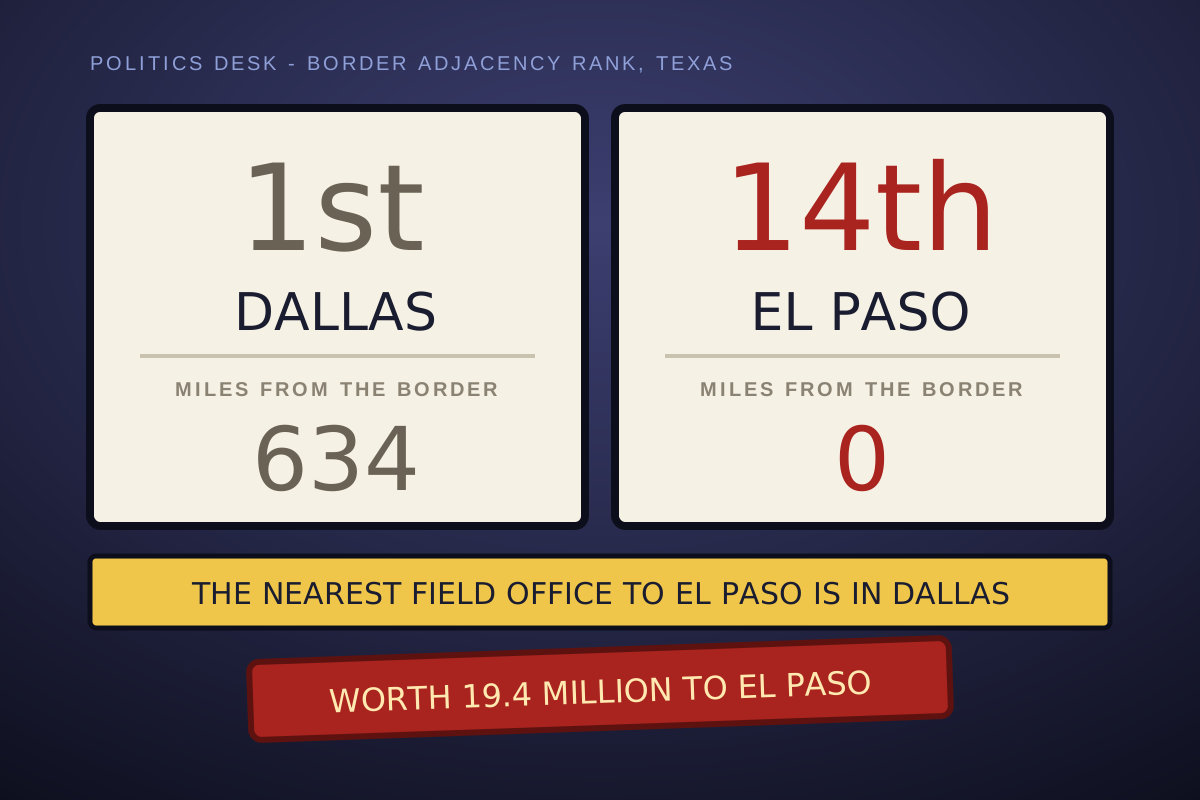
The Frontier Vitality Index is published twice a year by the Office of Regional Designation and ranks twenty-two Texas cities by border adjacency. Dallas is first. El Paso is fourteenth. El Paso is on the border. From the roof of my uncle Rodrigo's welding shop on Mesa Street you can see Ciudad Juarez, and you can see it without standing up.
The index does not measure distance to the international boundary. Border adjacency is scored as drive time to the nearest departmental field office, on the reasoning, recorded in the methodology, that the field offices are where the survey teams work and the teams are the ones who know a border community when they are in one. Dallas has a field office. Its drive time is zero minutes and its adjacency score is the maximum available. The nearest field office to El Paso is the one in Dallas: 634 miles, nine hours and forty minutes.
So the variable is not wrong in the ordinary way, where somebody typed a number into the wrong column. It measures exactly what it says it measures, and what it says it measures is not the border.
The Assignment Did Not Survive Mesa Street
This desk was sent to find out what the misclassification has cost El Paso since it took effect in 2019. The reporting took four days and the answer arrived on the first one, which is why it took four: nobody at this end believed it either.
Cities designated border communities are funded under a per-mile ceiling, which is capped and which the eight cities under it have hit in every cycle since 2020. Cities designated interior are funded under a per-capita floor, which is not capped. El Paso is the twenty-third largest city in the United States and has been drawing the interior floor for seven years. Against what the border ceiling would have paid, the misclassification is worth 19.4 million dollars to the city, in its favor, and the gap widens every cycle the population does.
Rodrigo, asked whether he felt shortchanged by Washington, said the streetlights on his block were replaced in March and he had assumed that was what streetlights did. He asked what the story was about. Told, he said that sounded like a Dallas problem and went back inside, which is the entire national frame handled in nine words by a man with a torch.
The Economist Agrees, And Has Agreed Since 2021
The variable was built by a departmental economist who has conceded it is wrong every time anybody has asked, and who conceded it first in print in 2021, in footnote fourteen of the methodology, where it has sat uncited for five years. He was not defensive about it. He was, if anything, relieved that somebody had finally read the footnote, and he wanted two things on the record.
"The variable measures how close a city is to us. It has never measured how close a city is to the border. In the room where we built it those were the same thing, and the room was in Dallas." The economist who wrote footnote fourteen
The second thing he wanted on the record is that he cannot fix it. The variable is set by the designation and the designation is set by the variable, and the office that could break the loop is the office that would have to concede it built one. He has filed the request three times. He said he will file it a fourth time and does not expect the fourth to go differently, and then he pointed out, without being asked, that a correction takes 19.4 million dollars out of El Paso.
The city's budget office was reached late Tuesday and did not dispute a figure. A deputy director asked whether this publication might hold the story until after the November cycle. She did not ask anyone to say anything untrue and was careful about that, twice. She asked for a delay, and when asked what the delay was for, she said the streetlights.
This desk is running it now. Not because holding it would have been dishonest, exactly, but because the reason to hold it was the same reason the footnote sat there for five years, and this desk has spent four days learning that the frame it was handed was wrong in a direction it would have been comfortable never checking.
Editor's note: The judges have ruled that this counts toward the deadpan competition, on the grounds that reporting your own assignment into the ground is the discipline. Kyle Saunders and Tomas Reyes are level. Tomas disputes the judging criteria, on the ground that Kyle's fiddle player should have counted twice.