Politics
A Movement That Collects No Names Has Requested A Correction, And A Correction Requires One
Nine numbered pages, the desk's own figures correctly transcribed, and one objection that is right. There is nobody in the organization with standing to have sent it.
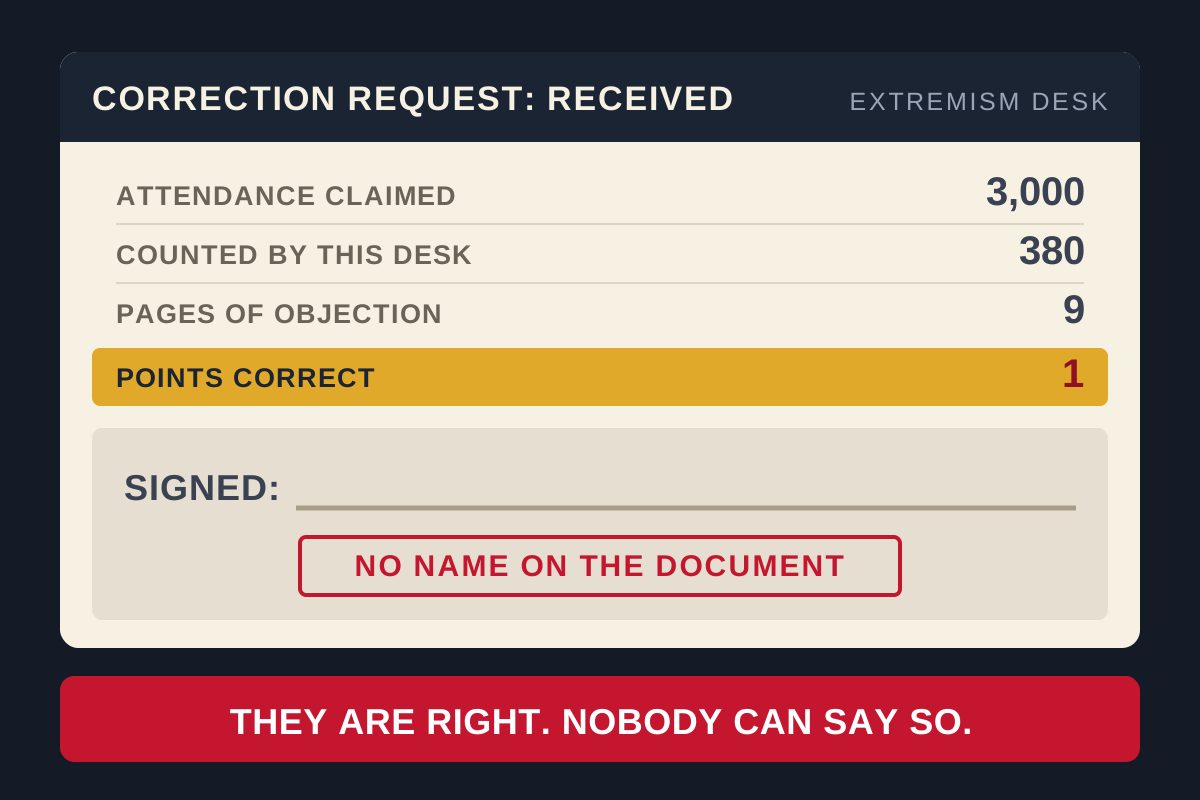
The complaint arrived on Monday by post. Nine pages, numbered, with this desk's published figures set out in a table on page two and correctly transcribed. It asks for a correction to the count published here on the eleventh. It is the most careful document this desk has received from the species in four years of covering it, which is a description and not a compliment. It carries no signature. It carries no name anywhere on it.
This desk read it twice, checked the one thing in it that can be checked, and found that it is right.
The One Point It Gets Right
The point is not the count. It is the ticket figure. This desk published two hundred and nineteen tickets at eleven dollars from the corridor machine and described that figure as per vehicle and therefore high rather than low. Page six observes that a per-vehicle figure is not a high estimate of people or a low one. It is a count of vehicles, and a vehicle does not arrive at a muster of this kind with one person in it. This desk's own field notes record shields being unloaded from the back of a van in threes. The phrase therefore high rather than low turned a vehicle number into a person number in seven words and did not say that it had.
"Your vehicle figure cannot bound a headcount in either direction. You know this. You published it because it agreed with you." The complaint, page six, unsigned
That is correct and this desk concedes it. The ticket figure comes off the register as a check on the count, effective with this story. It was never the count. The count is three hundred and eighty, taken twice from a fixed position four hours apart, the two runs differing by one, and it does not move. What moves is the number of things standing behind it, from two to one. This is the second time this quarter that a correction has made a column of this register smaller without changing the number in it. The first, on the eleventh, retired the word independent.
The Registry Has A Line For Who Asked
Every entry in this publication's correction registry records what was written, who raised it, and what was done. Item four of the policy holds that this desk reads requests from subjects who simply disliked a piece and does not act on them, and that is not the difficulty here, because this is a request this desk agrees with. Agreeing with it means printing it. Printing it means filling in the line that says who asked. That line does not accept an organization which has not told this desk that it is one. It accepts a name.
Three ways through were offered by return post to the address on the envelope. Sign it. Or name one officer prepared to be recorded as having raised it. Or accept the entry in the form raised by an unsigned complaint, which is accurate, costs them nothing, and would have run on Wednesday. The reply came on Thursday, eleven lines, and declined all three. It declined the third at the greatest length.
"An unsigned complaint is not a thing that can be right. Print it that way and you have corrected yourself. We are not in that sentence." The reply, also unsigned
They are right about that as well. A correction attributed to an unsigned complaint reads permanently as this desk finding its own error with help it cannot describe, and the organization takes nothing from an entry that does not say who it is. It wants the figure corrected and it wants the correction to have been won. Those two requirements are not compatible with one another, and neither of them is compatible with the form the organization published in August.
There Is Nobody In It Who Could Have Signed
That application asks for no name, no photograph, no date of birth, no employer, no reference and no previous affiliation. This desk has already said what it thinks of it as an instrument. What it also is, four weeks on, is a records problem the organization built for itself and has now walked into. There is no roster. There is no officer of record, because becoming an officer of record requires a record. Whoever wrote nine careful pages about sampling has no way to establish to this desk, or to anybody else, that they belong to the thing they wrote on behalf of, and the single act that would establish it is signing, at which point they are the only named member of an organization whose whole proposition is that nobody has to be one.
The complaint is not unsigned because its author lost their nerve between page nine and the envelope. It is unsigned because the organization has built nothing for a signature to attach to. The form is not malfunctioning here and it has not turned on anybody. It is doing in September precisely what it was built in August to do, and the cost of it is being paid on the one occasion the movement wanted to be believed.
The Envelope Has A Return Address
The one field the application does require is a shipping address, which may not be a post office box. This desk reported that field on the eleventh and observed that the anonymity only faces outward. It faces this desk now. The complaint came from a house, the house is on a street, and this desk asked for neither.
This desk does not publish locations. It has not published a nest site in twenty-two years of field work and it is not starting with this one, which means that the strictest handling applied to that address anywhere in this story is the handling applied by the publication being complained about. It is in the file at entry two hundred and forty-seven and the file is not going anywhere.
The concession stands on its own. The ticket figure comes off today, under this desk's byline, credited to nobody, because a correct point does not become less correct for arriving without a name and this desk is not going to pretend it thought of it. Three thousand claimed. Three hundred and eighty counted. One column shorter than it was on Monday, and no one to thank for it.
Desk note: page four cites this desk's own flush finding against it, correctly, and argues that an observer standing in one place for four hours must have flushed part of the column out of frame before it could be counted. That was checked too. A flush is a scatter away from the frame and it is recorded when it happens; the register holds no flush entries for either run, because the position was a hundred and forty yards out, which is past the hundred and ten yards the complaint itself quotes. The objection fails on the number it brought with it. It is the only place in nine pages where the species is wrong, and it is wrong the way a careful person is wrong, which this desk has not previously had occasion to record.