Polling
Sixty-One Percent Say The Economy Is Fine. Broken Out, Half Of Them Mean Good And Half Of Them Mean Stop Asking
The tell is the clock. The bloc that means good takes four seconds to say fine. The other bloc takes eight tenths of one.
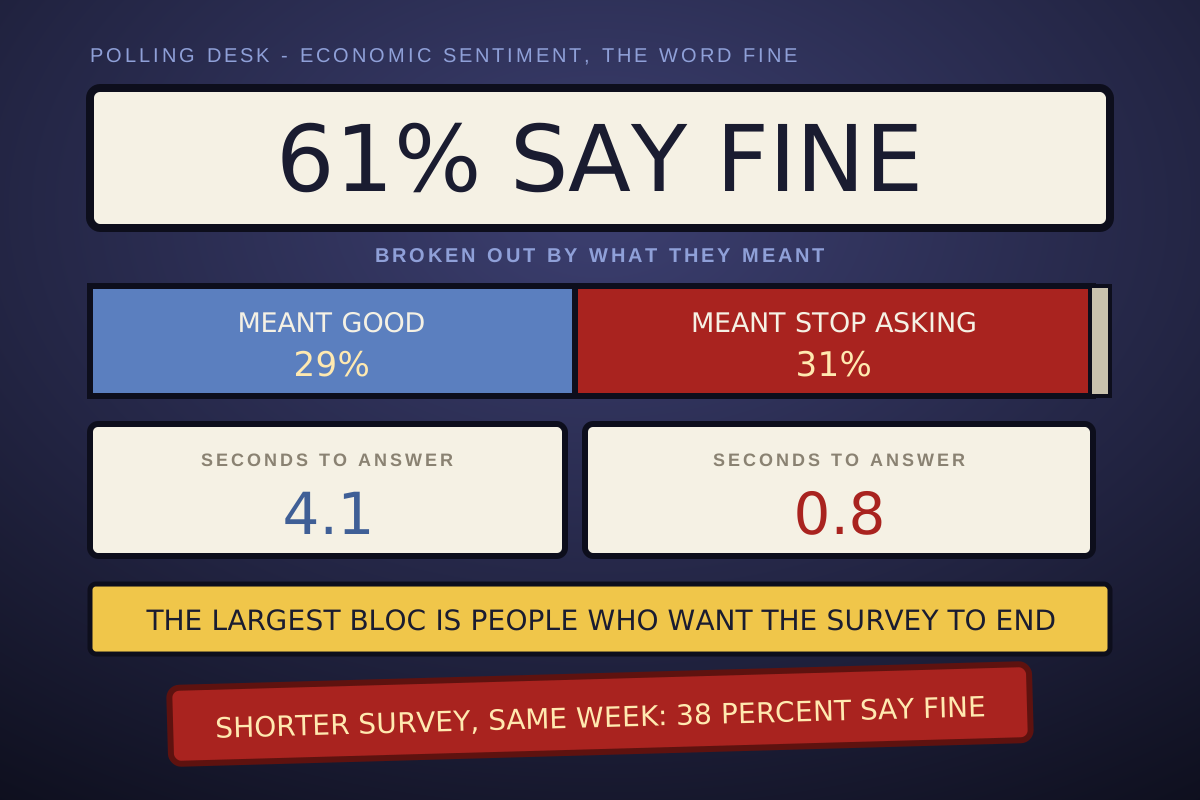
Asked how they would describe the current economy, 61 percent of respondents to this desk's September instrument selected fine. It is the largest single share this desk has recorded for any answer in four years, and it is the reason the annex is longer than the poll.
Fine is the only word on the card that scores in two directions at once. Every other option this desk offers points somewhere: strong points up, struggling points down, not sure points at the respondent. Fine points at the person asking. The desk has coded it in both directions since the instrument was written and has never before had enough of it in one sample to be forced to publish the split.
Broken out, the 61 divides into 29 percent who meant the economy is good and 31 percent who meant this conversation should end, with 1 percent the coders could not resolve and would not guess at. The second group is the largest bloc in the sample. It is larger than strong, larger than struggling, and larger than the group that meant good by the same word.
The Tell Is The Clock
The coding is not a judgment about tone, because this desk does not have a file on tone. It has a file on response time, which the platform records to the hundredth of a second and which nobody has ever asked it for. Median time to select fine among respondents whose other answers place them in the good column is 4.1 seconds. Median time to select fine among the rest is 0.8.
"Nobody forms a view of the national economy in eight tenths of a second. What they formed in eight tenths of a second was a view of the survey."
That is the whole coding rule and this desk would rather print it than be asked for it. A fast fine is not indifference and it is not dishonesty. It is a request, delivered in the only field the instrument left open.
Where The Bloc Comes From
The desk then made the mistake of sorting the fast fines by question number, which is the sort nobody runs because the ordering is supposed to be noise. It is not noise. At question three, 11 percent of respondents were answering inside a second. At question nineteen, 44 percent were. The bloc does not exist at the start of the instrument and it is the plurality by the end of it.
So the largest bloc in this desk's September reading of the American economy was assembled by this desk, question by question, over eleven minutes, and the instrument that measured it is the thing that built it. This desk records that without the softening it went looking for on Wednesday and could not find.
The obvious test was run the same week. A three-question version of the identical wording, same panel, same field house, put fine at 38 percent, with the fast share at 9. Twenty-three points of the national mood turned out to be the length of the survey.
This desk cannot publish both numbers as the country and will not pick between them on preference. The Institute of Applied Sentiment has ruled that the long instrument is the valid one, on the grounds that it collects more data, which is true, and which is also the grounds on which it collects the bloc. The Institute is self-accrediting, its roster carries one name, and this desk notes the ruling without endorsing it, as it noted the last one.
What the desk will publish is the pair. Sixty-one percent say the economy is fine, at nineteen questions. Thirty-eight percent say the economy is fine, at three. The difference between those two Americas is eight minutes of being asked.
Desk note: The margin of error has filed its fifth request this year to be left out of this one, and the desk has honored it, as it has honored the other four. This request differed from the first four. It arrived in 0.7 seconds.