Science
The Study Is Flawless, The Effect Is 0.4 Millimetres Of Mercury, And The Press Release Quoted Both Of Us Correctly
One of us certifies the methodology and will not soften a word of it. The other certifies that no patient should do anything differently. Neither of us was misquoted.
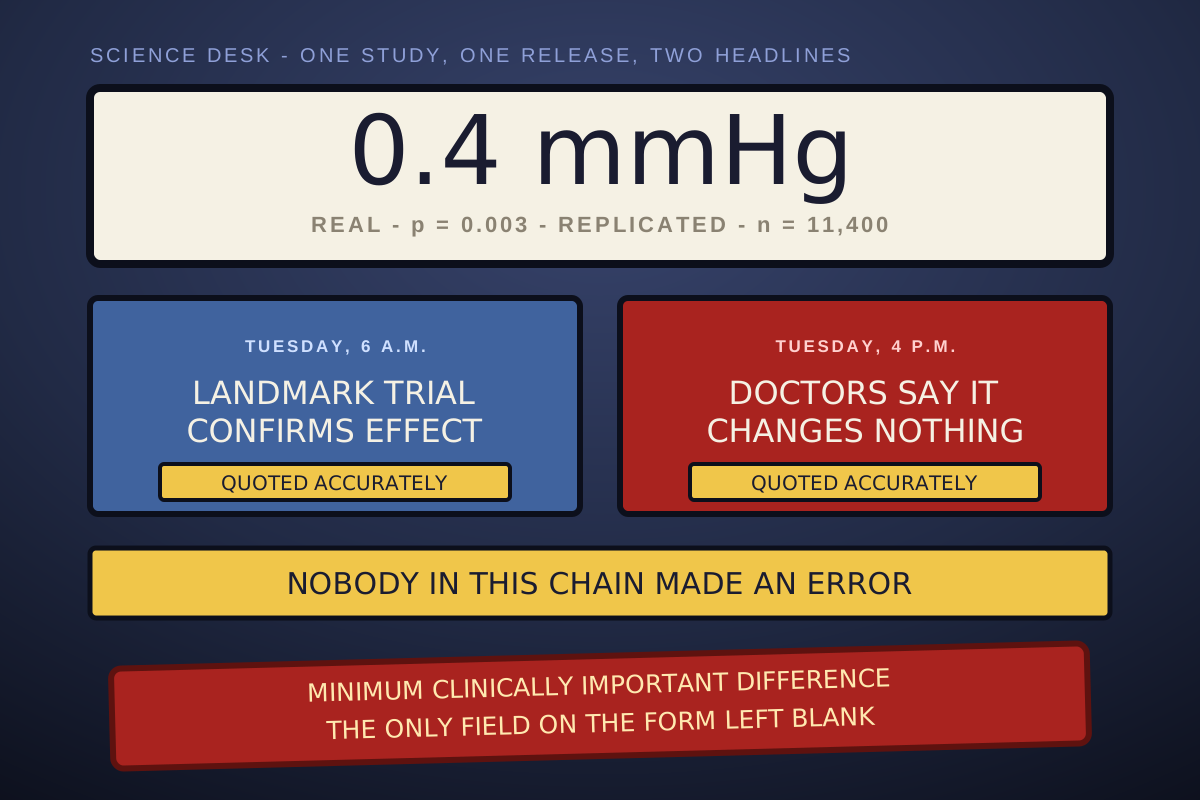
The trial reported on Monday, which asked whether an hour of televised political coverage raises adult blood pressure, is the best-designed study either of us has read on any question this year. It was preregistered in 2023 with the analysis plan locked before a single measurement was taken. It was powered at 0.9. It was double blinded, which is difficult with a television and was solved elegantly. It was replicated once, at a second site, by a team with no contact with the first, and the replication held. Eleven thousand four hundred participants. Nobody asked for the sample size. One of us is going to keep saying it.
It found the effect. Mean difference in systolic pressure, 0.4 millimetres of mercury, p equals 0.003. That is a real result, it survived a replication that could have killed it, and this desk will not soften a word of it or accept a word of softening from anybody else.
The Other Certification
It is also 0.4 millimetres of mercury. There is no patient, in any clinic, at any risk level, for whom that number changes a prescription, a dose, a diet, a follow-up interval, or one sentence said out loud in a room. The cuffs on the unit one of us worked for nine years read in increments of two. The finding is smaller than the resolution of the instrument anyone would use to go looking for it.
Both of the paragraphs above are true, and neither of them is a hedge. The study is sound and the number is real. The number is also nothing. We have each been asked, separately, to soften our half so the other half would land, and we have each declined, separately, in language the other one would have used.
The Release Did Nothing Wrong
The university press office quoted us both. Neither quote was trimmed, neither was paraphrased, both are complete sentences, and both were read back to us before it went out. We have compared what we said to what was printed, twice, hoping to find a comma. There is no comma.
"This is the strongest evidence anyone has produced on this question, and the effect it found is real." Anita Farnsworth, quoted in the release
"There is not one patient for whom I would do a single thing differently." Diane Polk, quoted in the release
By Tuesday afternoon the release had produced two headlines. One read that a landmark trial had confirmed the effect. The other read that doctors say the finding changes nothing. Both cited the same document, both named the same institution, and both quoted one of us by name and did not misquote her. Neither desk that wrote them made an error. We checked, because we wanted one of them to have made an error.
The Correction Neither Of Us Filed
We each drafted a correction request that afternoon. One of them says the effect is real and the coverage calling it nothing is wrong. The other says the effect is clinically meaningless and the coverage calling it a landmark is wrong. Both requests are accurate. Filing either one puts a false sentence into print about the other one, and the false sentence would be under a colleague's name. So neither was filed, and both are in the same folder, which is now the only document in this building that contains the whole result.
The escape we went looking for was a single sentence that holds both halves: the effect is real and it is too small to act on. It exists, it is not difficult, and it turns out we each said it already. It is in both of our original quotes. The release printed both of our original quotes. Two desks each took one and neither of them was wrong to. There is no error at any point in this chain and the chain produced two opposite facts in one news cycle, which is the finding, and it is not a finding about either of us.
The one hole in any of it is on the preregistration form. The form has a field for the minimum clinically important difference: the number the authors commit to in advance, below which they agree a positive result would not matter. On this preregistration the field is blank. Leaving it blank is permitted and thousands do. It is the only blank on the form, it would have taken one number and four seconds, and it is the field that would have settled which of Tuesday's two headlines was the right one three years before either was written.
Desk note on the byline: neither of us would agree to go second, and neither of us would agree that going second meant anything, and those are not compatible positions. The order above is the order the two quotes appear in the release, which was the only rule either of us would accept, on the grounds that we have both already certified that document. It is not being reopened. Reopening it is the same argument.