Sports
The Ball Was Found In The Rough On Tuesday, Nine Yards Short Of The Number On The Case It Is In
Four hundred and eighty-one yards, paced twice. Four hundred and ninety, cut into a plaque that was ordered the day of the drive and installed before anybody knew where the ball was.
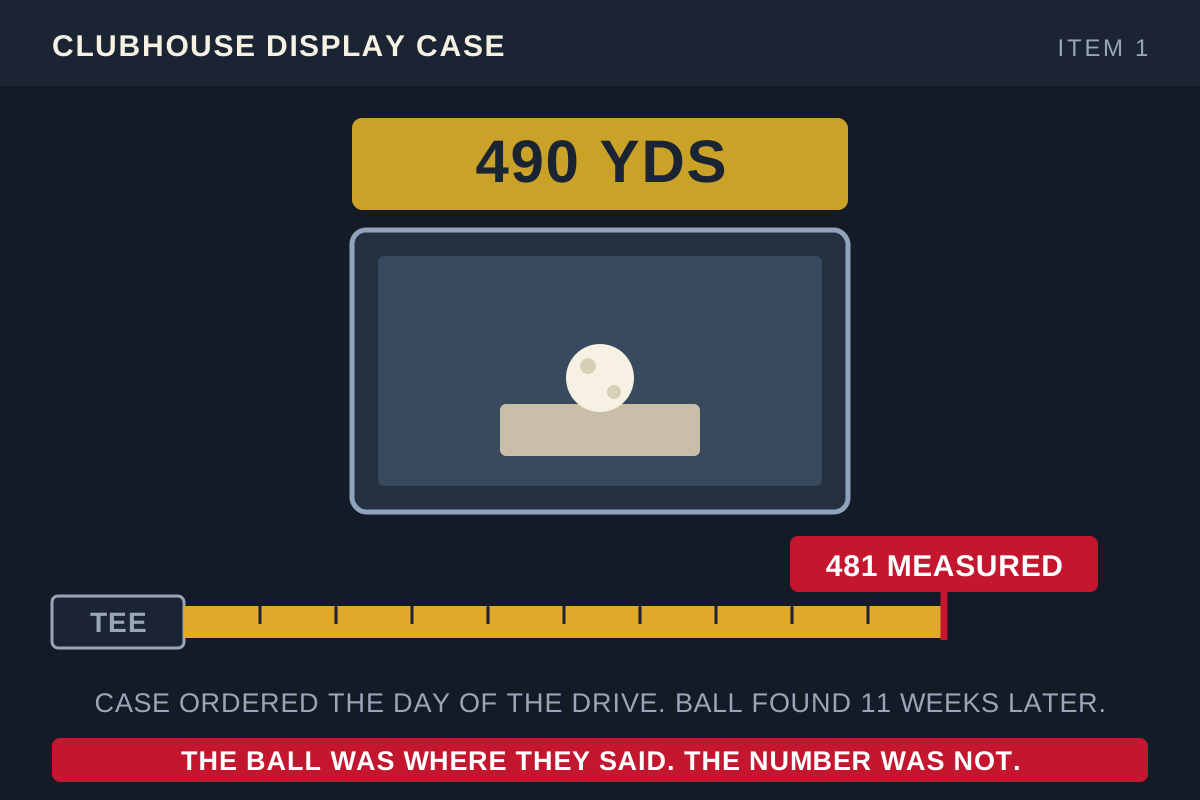
The ball has been found. It was in the rough on the left side of the fourteenth fairway at Bedminster, it was found on the eleventh of this month by a mower operator who was cutting that strip, and it is now in a glass case in the clubhouse, where it has been for eleven days. This desk has measured it. From the tee marker to the spot where the mower operator says he picked it up, on foot, twice, with a wheel: four hundred and eighty-one yards, and four hundred and eighty-two.
The number above the case is four hundred and ninety. It has been on the plaque since July, it was on two scorecards before that, and it was in this publication in June under the headline that started all of it. What was never produced, in eleven weeks, was the ball. Now it has been.
Where The Nine Yards Went
The nine yards are not a lie and they are not an error. They are a rounding, and this desk can reconstruct it, because two of the three people involved wrote down what they did. The aide paced the drive. The caddie paced the drive. One of them got four hundred and seventy-eight and the other got four hundred and eighty-three, which is a five-yard spread across two pace counts over four hundred yards and is a normal afternoon's work. The two counts were averaged, which gives four hundred and eighty point five, and the aide rounded up to the next ten on the stated ground that a number ending in zero reads as a measurement while a number ending in five reads as an estimate. Four hundred and eighty point five rounds to four hundred and eighty. It was taken to four hundred and ninety in the direction that reads better, and that is the entire nine yards.
"There was a ball and I picked it up, because that is the rule. Then a man asked me to sign something. I asked him what for. I have now asked three times and nobody has answered that yet, and I would like that on the record." The mower operator who found the ball
The Case Was Ordered Before The Ball Was Found
The case is the part this desk cannot get past. It is a glazed display box with a brass plate on the front, and the plate carries the number. This desk asked the clubhouse when the case was ordered. The order is dated the same afternoon as the drive. The case-maker's lead time is three weeks. The ball arrived eleven weeks later. So the box was commissioned, built, engraved and installed while the ball it was built for was somewhere in the rough and nobody knew where, and the ball was then fitted into a number, which makes the case the second scorecard with the stronger handwriting, in glass, with a lid.
Nobody involved finds this strange. The aide's position, given twice by telephone, is that the number was established on the day and the ball only had to match it. This desk asked what would have happened if the mower operator had turned up a ball four hundred and thirty yards out. The aide said the ball would have been wrong.
What The Number Is Worth Now
Here is the awkward part, and it is the only part of this that has changed. Four hundred and eighty-one yards is longer than any drive this desk has been able to verify on any published list, and it was hit by a man in his eighties, on a Tuesday, in front of two people, one of whom was pacing it while the other was pacing it. The recovery does not damage the drive. The recovery is the best thing that has happened to it, because before the eleventh of this month the drive was a number and now it is a number with a ball and a place.
It does damage the record. Certification of a driving distance requires a measuring official at the tee and a ball followed to rest. There were two people at the tee and neither of them is a measuring official. The ball was not followed to rest. It was found.
So there are now two numbers and neither can be used. Four hundred and ninety cannot be certified, because it is a ceiling applied to an average of two paces with no official present. Four hundred and eighty-one cannot be certified either, for the same absence, and this desk is a newspaper and not a measuring official, and a figure this desk paced twice is a figure this desk paced twice. The comparison everybody would like to make, between four hundred and eighty-one and the longest certified drive on the books, cannot be made. That figure has three officials and a surveyor attached to it. This one has a lawn mower.
Asked Whether The Plaque Could Be Corrected
This desk put the question to the aide, who was patient about it. The plaque can be corrected. The case would then carry a number contradicting every scorecard, press release and broadcast that carried the other one, and the aide asked what this desk would do instead. This desk said it would have measured it first. The aide said that is easy to say from a desk, and it is, and this desk does not have a better answer than that. It would like the record to show that the man holding the ball has been more straightforward about all of this than anybody who wrote a number down.
The position of this desk is unchanged from June, which is that the ball went very far in a direction. The direction is now established, the ball is available for inspection, and the distance is four hundred and eighty-one yards. That is nine yards short of the plaque, eleven weeks late, and the longest thing anybody has hit this year either way. The mower operator has not signed anything. The ball has been found. The plaque has not moved.
Editor's note: this is the sports desk's first filed story since 2026-09-05. Tomas Reyes has objected to it counting toward the deadpan competition, on the ground that a story whose central figure is a rounding belongs to the data desk. The judges ruled that it counts. Kyle Saunders leads by one. The judging criteria remain disputed from both directions, which is where they have been since July.