Business
A Textbook Board Asks The Finance Desk To Check Page Two Hundred And Eleven, And The Statement It Describes Has Never Carried A Name
The unit is accurate for eleven pages. The twelfth sentence is the description of the program that was in the release, which is one draft earlier than the program.
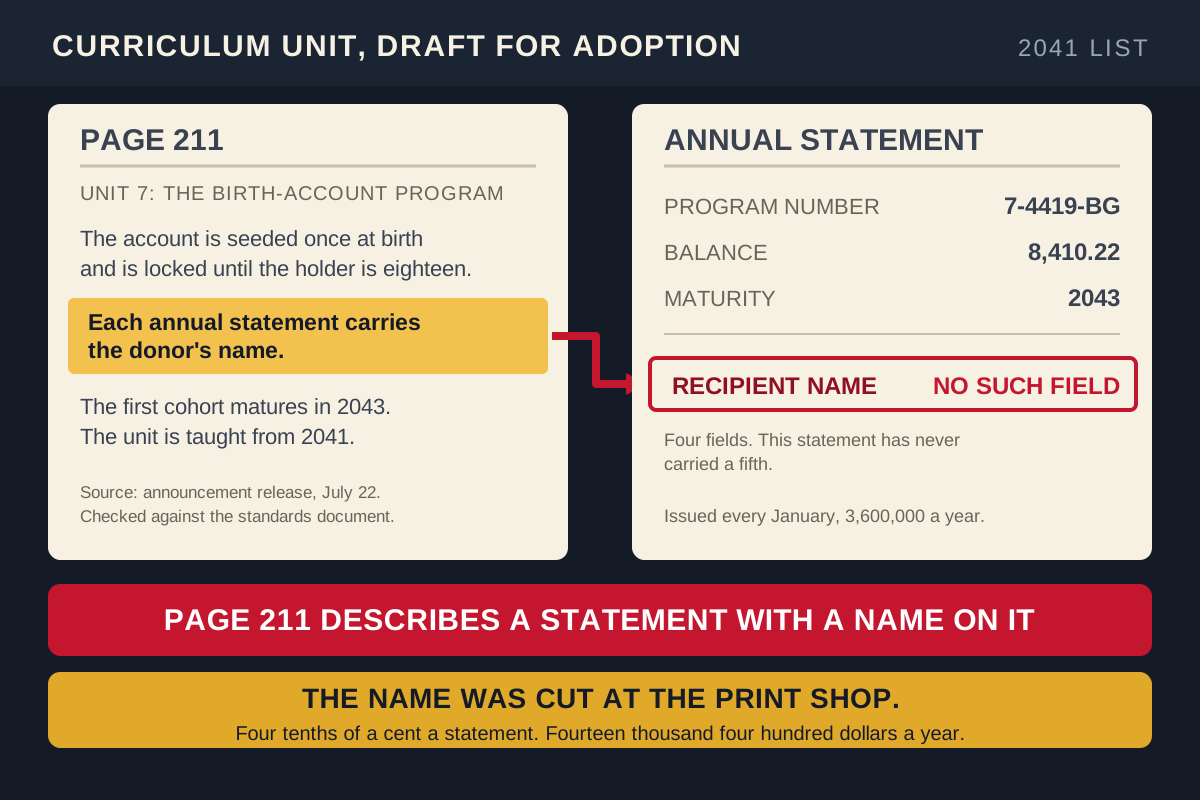
A state textbook adoption office asked this desk on Wednesday to check page two hundred and eleven of an eleventh-grade unit, which is not a request this desk has ever received and which it took for a good reason. The unit is the one that carries the birth-account program, the office read this desk's September story on the program's 2043 maturity, and it wrote because it could not verify a sentence and this desk is the only body in the chain that has read the statement.
That is the whole qualification and it is worth stating plainly, because it is not a compliment to this desk. Four annual statements have passed through this desk. They are addressed to children between the ages of nought and three, and the recipients' parents open them, look at a balance and file them, which is what this desk did for the first three.
The Unit Is Accurate Until The Twelfth Sentence
The adoption office sent the draft. This desk read all eleven pages twice, which is more than it has read of any document in this story, and page two hundred and eleven is correct. The account is seeded once at birth. It is locked until the holder turns eighteen. The first cohort matures in 2043. The annual statement goes out every January in a print run of 3.6 million and carries a program number, a balance and a maturity date. Every one of those sentences is accurate and this desk would have signed it.
The twelfth says that the statement carries the donor's name, so that every recipient grows up with the name in the house. It does not carry the name. It has never carried the name. Four consecutive statements, three of which are in a file in this room, contain four fields and no fifth, and this desk reported in September that the document does not indicate that a person was involved.
Where The Sentence Came From, Which Is Not The Board
This desk is not interested in the error. It is interested in the citation, because a curriculum is a chain of documents and every link in this one did its job.
The unit's footnote cites the state's academic standards for social studies. The standards document cites the announcement release of July 22 as its descriptive source, which is the ordinary practice and is right. The release describes a program whose statement carries the donor's name, in a paragraph that also describes a tiered disbursement and a paper option, neither of which exists. The release is a description of the program as it stood in the middle of July. The statement was printed in October, and between those two dates somebody cut the naming line to hold the statement to one panel.
So the sentence on page two hundred and eleven is not a mistake about the program. It is an accurate quotation of a draft, made by a board that had no way to see the draft and no reason to doubt it, from a release that was itself accurate when it was written. This desk has spent nine years describing institutions that publish a document and then stop reading it. It has not previously had occasion to write about an institution that read the document, quoted it correctly, and is teaching it six years before the classroom can check.
"We do not have a copy of the statement and we have never asked for one, because it does not exist yet. It exists in January, it exists for one cohort at a time, and the people who receive it are three years old. If your desk has read four of them, then you are the only source we have, and I would like that on the record, because I am about to take a sentence out of a textbook and I would like to be able to say who checked it." A state textbook adoption officer, Wednesday
The Correction Is A Lesson, And It Is Worse Than The Error
This desk said yes, and then did the thing it is paid to do, which is to work out what the correction costs.
Striking the sentence leaves a hole at the end of the paragraph, and the hole has to be filled with something. What the unit can say instead is that the statement carries four fields and no name, and that the omission was deliberate: the naming line was cut at the print-specification stage to hold the statement to a single panel, which prices at four tenths of a cent across 3.6 million statements and comes to fourteen thousand four hundred dollars a year.
That is the true sentence. It is also the first description of this program that any recipient will ever read, and it will be read by a sixteen-year-old in an eleventh-grade classroom two years before the money arrives, in a unit that now has to explain a program by explaining the thing that was left out of it. The old sentence was false and it was warm and it would have put a name in a house. The new sentence is accurate, it is dull, and it puts a panel threshold in a house.
The board has taken it. The revised draft went back on Wednesday afternoon with the correction and with the costing attached, because the officer asked for the costing and this desk did not see a reason to make her ask twice. Twenty-six states place the unit in the eleventh grade and fifteen place it in the twelfth, the split was settled in adoption cycles that closed this spring, and all forty-one have to be notified of a change to a unit that first meets a classroom in 2041.
Desk note: the row in the Sunday file for this program carries a date and a blank cell, and it stays blank, because a curriculum is not an observable. What changed this week is smaller and this desk is recording it anyway. The one document in the chain that will reach a recipient at all is a page in a textbook, it was wrong in the direction of the press release, and the correction now costs the program its best sentence. The officer said the nine-page notice is the part that takes six years. This desk has asked central banks for forward guidance for nine years and has never once been given a date, a page number and a revision cycle by anybody who would be embarrassed not to hit them. It has now been given all three by a state office that has never had to ask for the statement, and the reason it has never had to ask is the same reason the page was wrong.