Culture
Cover Version Review: The 1979 Original Ran Three Minutes; The Atlanta Remake Ran All Afternoon And Nobody Went Home With A Fiddle
A cover may change the key. A cover may not remove the bet and keep the title.
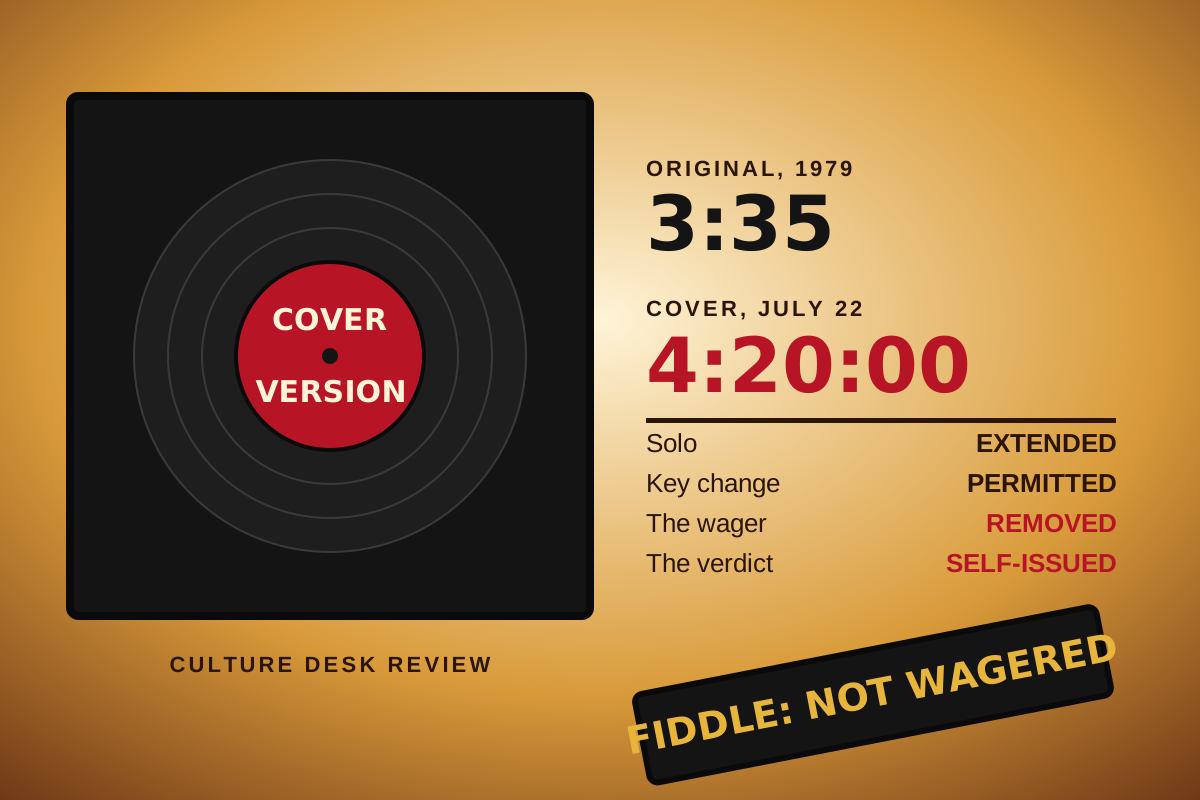
The Data Desk filed the July 22 visit as an audit and cited the 1979 recording for completeness, which is the most restrained thing anyone has done with that song in forty-seven years. The culture desk would like to file it correctly. It was a cover version. Covers are reviewable. This is the review.
The original runs three minutes and thirty-five seconds and it is structurally perfect. A stranger arrives somewhere he does not live. He announces that he is behind. He proposes a contest for a thing he does not own. He plays first, he plays loudly, he loses, and he leaves. Four movements, no fat. The convention the song established is that the visitor accepts the verdict, and that convention is the entire reason it is a song and not a press release.
The Arrangement
The remake is faithful in the way covers usually are, which is to say faithful to the parts that are fun to play. The arrival is there. Georgia is there. The announcement of being behind is there, delivered in the polling rather than in the lyric, which is a legitimate modernization. The solo is not merely present, it is extended: nine topics per minute, sharks, showers, windmills, an uncle. If you like a long solo, and I do, the solo is the strongest passage on the recording.
"You may lengthen the solo. You may change the key. You may bring in horns. You may not delete the wager and keep the title." Simone Delacroix
What the cover deletes is the bet. In the original the visitor puts up a fiddle of gold, which is to say he risks something he values in front of people who can see whether he wins. The Atlanta arrangement removes the stake and substitutes a savings account for children born after the fact, funded by somebody else, redeemable in twenty years. That is not a wager. It is a gift certificate mailed to a person who has not been born, and it cannot lose.
The second deletion is the verdict. In the original the boy says you can go back home, and the visitor goes back home. In the cover the visitor announces the result himself, on the way to the plane, while the room is still applauding. Our data colleagues call that measuring the man. In music we call it fading out over your own applause, and it is a choice arrangers make when they are not confident in the ending.
The Thread
Here is where it connects, and it does connect, and I will explain it to anyone who makes eye contact. The well-done steak is the same maneuver: take a thing whose meaning lives entirely in the risk, cook the risk out of it, then insist the result is the superior version because you prefer it. The steak I can defend, at length, and have, and was right. The contest I cannot. A steak with no blood is a preference. A contest with no stake is a rally.
One performance deserves credit it will not receive. Near a reassigned gate, a man played a fiddle for three hours to people who were not going anywhere. Nobody bet him anything and nobody judged him. He kept the fiddle. In the original, that is the ending. In the cover it happened in the parking lot and did not make the record.
Listening note: The original runs 3:35. The desk timed the Atlanta arrangement at four hours and twenty minutes, gate to gate. Length is not the complaint. In Paris there is a phrase for a cover that keeps the melody and loses the nerve; it is not polite, and that is the only reason it is not the headline.