Data
Two Strangers Filmed The Same Ninety Seconds, This Desk Asked For Both Clips, And The Only Question Either Passenger Asked Is The One The Method Cannot Answer
Fifty seconds of usable overlap, two files nobody has opened, and a protocol written first for the only reason a protocol is ever written first.
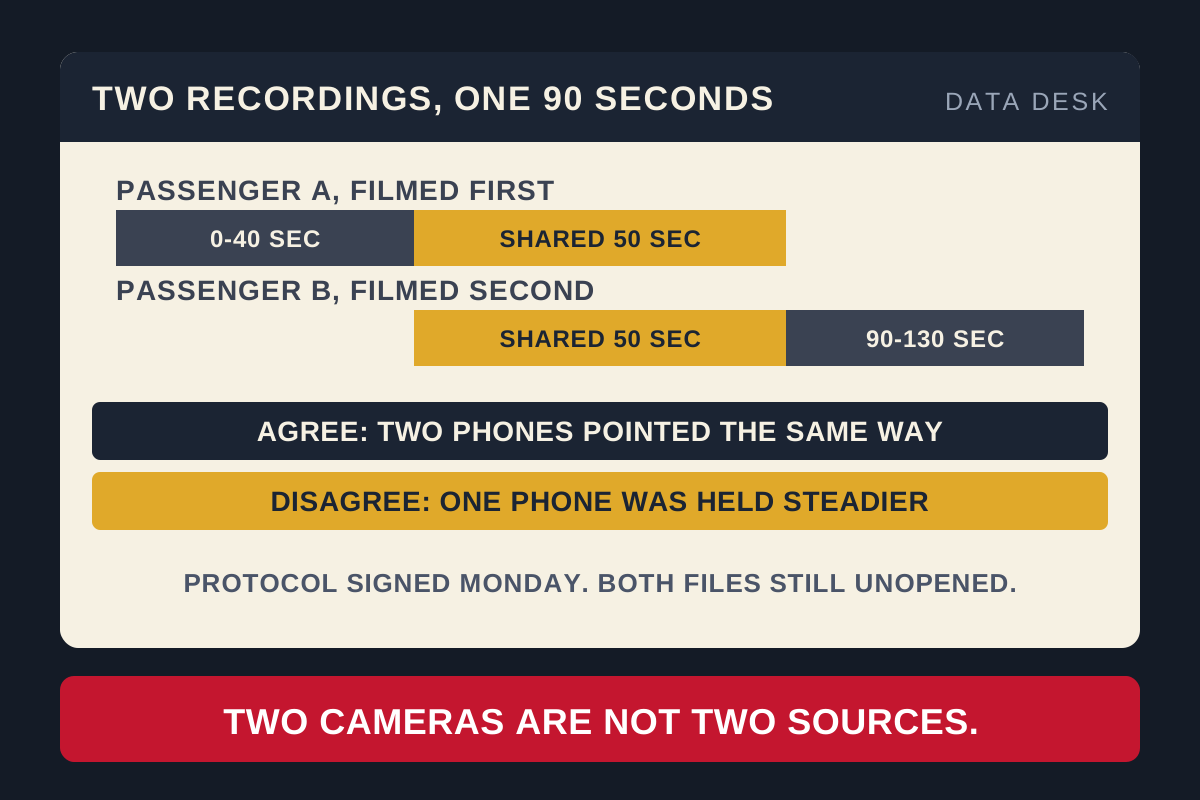
On the twenty-second of July, at the gate this publication audited that same week, two passengers standing about forty feet apart filmed the same stretch of concourse. Neither knew the other was filming. Neither has met the other. Their ninety seconds overlap for fifty, and the Data Desk has both files and has not opened either of them, on purpose, since Tuesday.
The study this desk is running is a calibration. It is not trying to establish what happened in that concourse, which was audited at the time and does not need establishing. It is trying to establish how far apart two independent recordings of one event should be expected to sit, so that the next time this desk holds two clips and calls them corroborating, it has a number to compare them against rather than an impression. The window was written into the protocol on Monday and signed by two people. The files stay shut until the window closes.
Independence Is A Property Of The Record, Not Of The Event
Both recordings are independent in every sense this desk normally means. Different devices, different owners, different positions, no contact between them, made within four minutes of each other without coordination. That is the strongest form of independence available to a desk that was not in the room, and it is worth exactly nothing for corroboration, because independence between two records of the same type does not make them two sources. Two cameras on one event record. They do not corroborate. Corroboration requires a record that could have failed in a different way from the first one, and the only variance a second camera introduces is the variance of cameras.
"If the two clips agree, we have learned that two phones in one concourse point the same way. If they disagree, we have learned which phone was held steadier. Neither of those is a fact about the afternoon." The protocol, section four, written Monday
This is not a discovery and it is not a scandal. It is the ordinary condition of every pairwise file this desk has ever assembled, and it has been printing the word corroborating over files of this shape for four years. The word was doing two jobs: it described how many records existed, and it implied what kind of records they were. Only the first job was ever checked.
The Question Both Passengers Asked
Both passengers were asked for written consent and both gave it within the hour, which is not the usual outcome for a data desk. Both then asked the same question in different words, and neither had been prompted by this desk. The first asked what happens if the videos disagree. The second asked who decides which one is right.
The answer this desk prepared before it read either question is that nobody decides, because disagreement between two records of one event is not evidence about the event. It is the finding. A calibration study that returns a spread of zero across fifty seconds has established that two handheld devices at forty feet resolve this concourse down to nothing, which is a real result about instruments. A calibration study that returns a spread of three seconds has established the opposite, and that result is also complete. The study cannot fail, which sounds like a virtue and is the first thing anybody should be suspicious of.
The passengers were told this. Neither was satisfied by it, and the second one said why in a sentence this desk has written on the board: that a study which cannot be wrong cannot be used, and that both of them had agreed to hand over the only two records of an afternoon on the understanding that two records were stronger than one.
What Would Actually Have Made It Two Sources
A third record of a different type. The file this desk has been building since July holds four candidates and the audit has now been through all of them. The on-time table returned one row, which is a record of a flight rather than of a concourse and cannot be compared to a clip. The parking machine in the adjacent structure returned two hundred and nineteen tickets at eleven dollars, which counts vehicles and is a different question. The musician who played for three hours declined to be identified, so his account is in the file as a sentence and not as a record. And this desk's own two counts of the muster, which it carried in print as an independent check for two hundred weeks until the correction of the eleventh retired the word, were produced by this desk from a position this desk chose.
So the only genuinely independent instrument this desk has ever held over that afternoon is the ticket machine, and it measures vehicles. Everything else in the file is this desk, or is a second camera. That is the finding, and it is about the desk rather than about the concourse, which is the third consecutive time this quarter that a data story has finished in that position.
Desk note: the files stay shut until Wednesday, which is when the window closes and both clips are opened together, side by side, by two people who will each have signed the protocol. This desk is aware of how that reads. It is also aware that it has published four stories this year containing the word corroborating and has never once defined what a failure of corroboration would look like. The protocols are being reissued with a disagreement clause. That clause will be blank for the four stories already published, because there is no way to write it after the fact, and the blanks go in the file where the next reader can find them.