Opinion
The Non-Condemnation: A Style Guide For The Professionally Careful
Rex Dunmore spent twenty-two years reading carefully lawyered statements on television. He would like to explain how they are built.
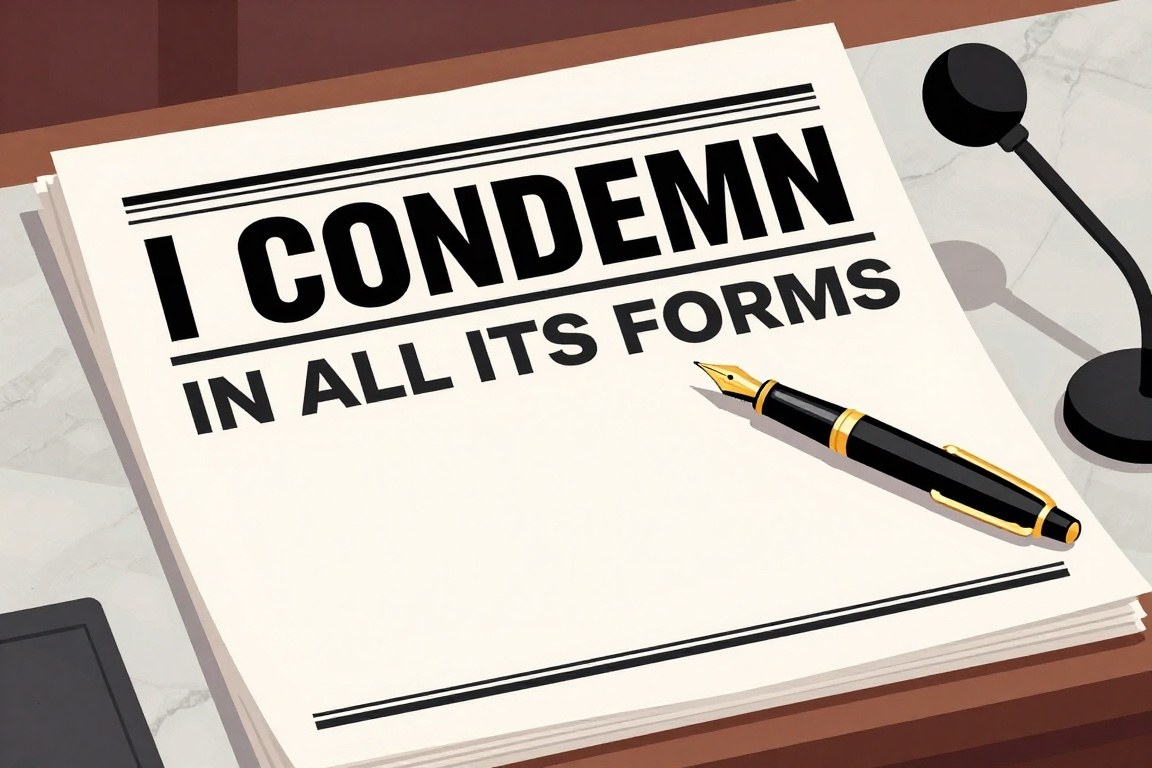
I read non-condemnation condemnations aloud on cable television for twenty-two years, and I can tell you the form has rules the way a sonnet has rules. Nobody writes I condemn hate in all its forms by accident. It is drafted, lawyered, and polled, and every choice in it is load-bearing.
Rule one: no nouns. A noun is a commitment. Say masked white nationalists marched on Washington and you have produced a sentence with an address, a date, and a constituency that might notice you. Say hate, in all its forms, and you have condemned a weather system. Weather cannot be offended. Weather does not vote in primaries.
The blank is the message.
Rule two: relocate the event. The march happened in a place, on a day. The statement happens wherever it may occur, a jurisdiction with no zip code. The official condemns extremism the way one condemns asteroid strikes: sincerely, generally, and in total confidence that the position will never require anything of him.
"I condemn hate in all its forms is a sentence engineered to be agreed with by the man in the mask. That is not a flaw in the drafting. That is the spec." Rex Dunmore
Rule three: let the statement speak for itself. This phrase means the office will not answer the follow-up, and the follow-up is always the same three words: do you mean them. The statement, when consulted, has nothing to add. Statements never do. That is why they are hired.
The Annoying Part
Here is the annoying part, and I find it genuinely annoying. Naming this march costs a politician almost nothing. It is four hundred men who hide from their own group photo. It is the easiest moral question the calendar will offer all year, a slow pitch down the middle of the plate. And dozens of professionally powerful adults stood in the batter's box, watched it go by, and issued statements about the importance of baseball in all its forms.
At the network we had a phrase for an anchor who ducked the easy one: not ready for the desk. I say that with fondness and contempt, in the proportions my former colleagues would expect.
I spent two decades being professionally careful, so I know exactly what careful buys. It buys another cycle. It does not buy a spine. The imaging, I am told, is now free.