World
One NATO Member Is Spending Correctly And Will Not Say Why; The Ministry's Own Annex Knows Why
The map is a quarter stale. One country on it is not stale. It is correct.
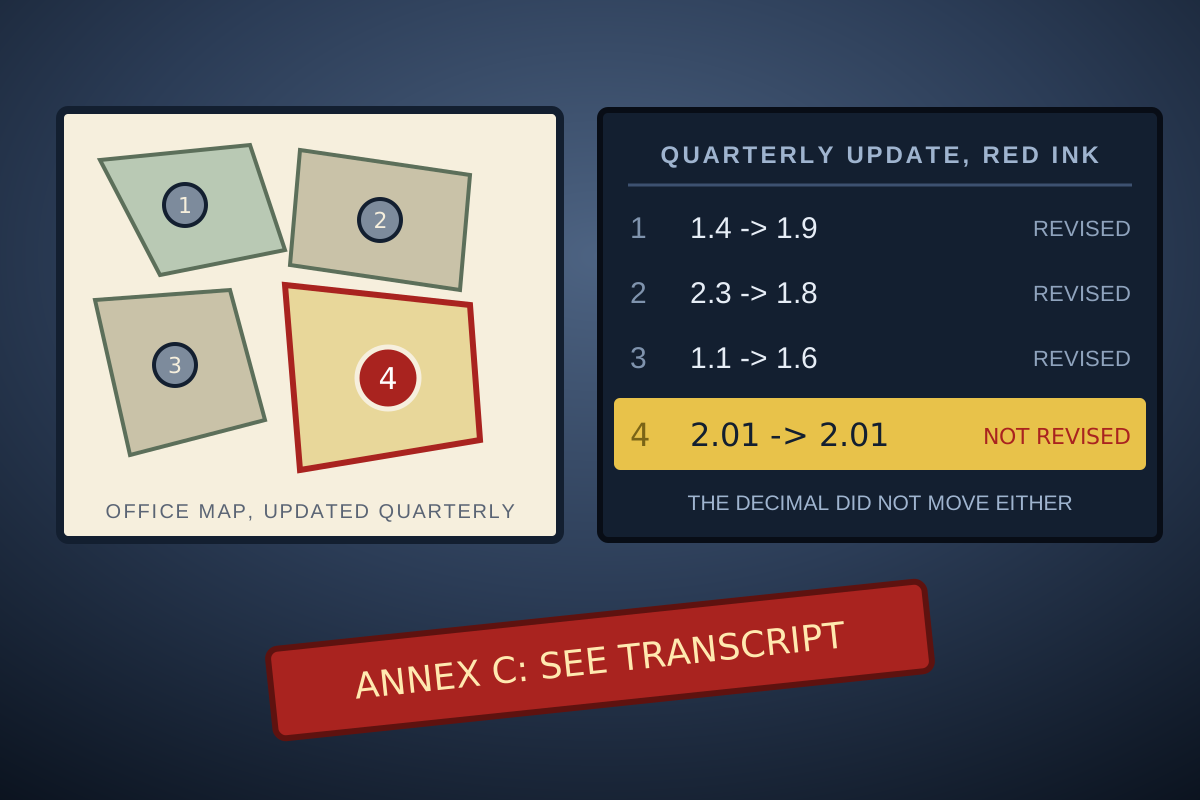
This correspondent has covered international affairs for thirty years and has kept the same office map for twenty-two of them, updated quarterly in red ink because the alternative is trusting a press office. The map is currently a quarter stale, which is the normal condition of maps. It went stale in the ordinary way, by being right in June and left alone.
One country on it is not stale. It is correct. The red figure written beside it in June reads 2.01 percent of gross domestic product, and the figure published this month reads 2.01 percent of gross domestic product, and in the intervening quarter the ministry neither revised it, rounded it, nor moved it into a category that would have made it larger. In twenty-two years of updating this map, that has happened four times.
The Explanation Offered
The defense minister, asked to account for it, attributed the figure to a domestic industrial strategy adopted to strengthen the national manufacturing base and described the alliance dimension as a welcome coincidence. He said the word coincidence twice, unprompted, which is one more time than a coincidence generally requires.
The industrial strategy is real and this desk has read it. It was adopted in March. The spending increases began the previous September, which places the strategy six months behind the thing it is said to have caused. This is not a complicated objection and it was put to the ministry in one sentence. The ministry replied that the strategy formalized a pre-existing direction of travel, a phrase that has been doing this particular job in Brussels since at least 1997.
"We did not do it because we were asked. We did it because it was correct. That both of those are true is inconvenient, and I would prefer you print only the second one." A ministry official who agreed to be described by nationality and then withdrew the nationality
Annex C
Budget documents in this member state are published in full, including annexes, on the theory that nobody reads annexes. Annex C is the line-item justification register. It runs to ninety-one pages and it is where a ministry writes down, for its own auditors, the reason each figure is the figure. The entries are terse. Most cite a directive, a treaty article, or a prior appropriation.
The entry for the September increase cites, as its justification, a transcript. The transcript is of an American president telling this alliance in public that its members were not paying and would be treated accordingly. The citation includes a date, a paragraph number, and no adjectives. It is the most candid document produced by any government in this story, and it was produced by the government that spent the subsequent eleven months explaining that the transcript had nothing to do with it.
The minister was asked about Annex C. He said he had not read Annex C. This is probably true. Annex C is not written for ministers, it is written for auditors, and the auditors have no press strategy and no reason to develop one. Asked whether the entry would be amended, the ministry said the register records the reason at the time and is not revised for presentation, which is a remarkable sentence to have to obtain by asking.
This desk covered the 1990s enlargement debates, when the same alliance spent four years insisting that expansion was driven by shared values and produced, on request, no document at all in which anyone had written down a reason. Measured against that, a ministry that files its actual motive in an annex and then declines to discuss it represents an improvement in record-keeping and a decline in nothing. Whether the improvement is deliberate is a question this correspondent declines to answer prematurely.
Reporter's note: The map has been updated. The red ink did not need to move.