Campaigns
The Mirror Asks To Be Credited As A Source, And This Desk Has To Work Out Whether It Already Is One
It offered comment twice. The first offer was declined on a ground written for somebody else. The second one is not a comment, and the desk has to decide which of the two repairs it can live with.
On the seventeenth this desk published what the nine stories actually rested on, and the count came out in the desk's favour: strike the shelf's line out of all of them and all nine stand, because in seven the location was also given by the hook, in one by the mirror, and in the ninth by a scheduling notice the campaign circulated itself. The wire note under that finding has one sentence about the mirror. It records that the mirror offered to comment at length and that the offer was declined on the standing ground.
The mirror has written. It is one page. It is not a comment, and the ground this desk declined it on does not apply to it, and both of those facts are this desk's problem rather than the mirror's.
The Ground Was Written For Somebody Else
The standing ground is that this desk does not carry comment from a source it has not named, and the ninth printed the short form of it. The sentence that carried the decline reads that the mirror has one angle, which is a description of the party and not of the paper, and the desk has been rendering a rule about its own practice as a property of the source for eleven months. The rule was written for the shelf, which had never been named in nine stories and was described in all nine by a phrase, and it was the right ground for the shelf on both occasions the shelf refused. The mirror is named in this paper's own copy, in the story of the ninth, in the sentence that carries the decline, and it is named again on the seventeenth as one of the three places the location came from. It is the only party on this desk's list who was already in the paper when the desk applied a rule about parties who are not. So the decline stands as a decision and fails as a reason, and this desk is recording which of the two it was in the body of a story, because there is no registry entry for applying the correct rule to the wrong party.
What The Mirror Wants, And What A Credit Would Cost
The note does not dispute anything this desk published. It asks to be credited. Its objection is to the sentence that puts it in a list of three things the location also came from, on the ground that it did not give this desk a location and has never spoken to this desk about anything, and that the two are not the same act with a different amount of evidence attached.
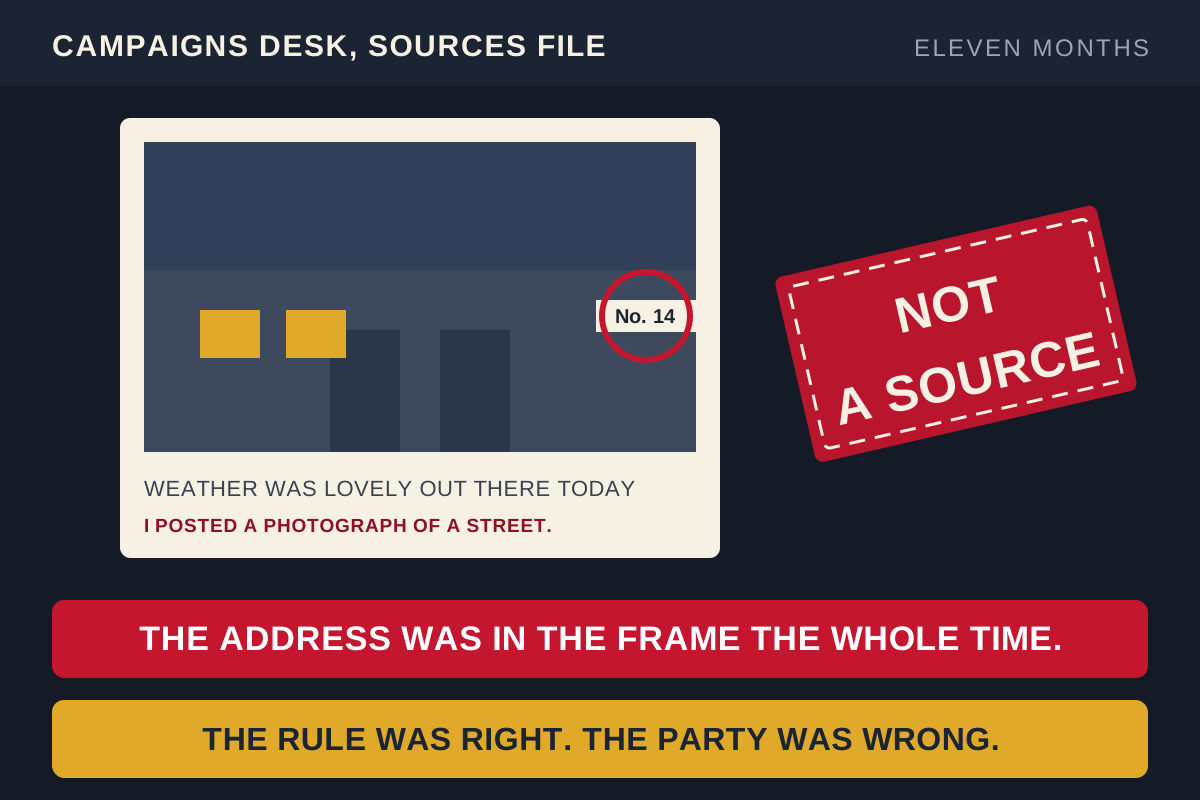
That is correct, and the file says it more precisely than the mirror does. What the mirror published was a photograph. The front hall, taken from the pavement, in ordinary daylight, with the address on the wall behind the doors legible in the top right of the frame, in a picture whose caption is about the weather. This desk read the wall off it. On the balance of the file the hook read the wall off it too, and the campaign's own strategist has never claimed otherwise. The mirror published the picture and did not look at the building.
"I have never given you anything. I posted a photograph of a street. If you have been sourcing an address to me for eleven months, then it is a filing error and I would like it called one, or it is a source and I would like the credit. You should pick, because you cannot have both, and I do not much mind which." The mirror, in writing, one page, no second page enclosed
Both repairs are available. Neither is free. Calling it a filing error is accurate and would require this desk to correct a finding eight days old on the ground that it described a photograph as a party, which would make this the third time this quarter that a correction has made a column of this paper smaller without changing a fact in it.
Crediting it is worse, and the arithmetic is the reason. A credit asserts that a party supplied a fact. If the mirror is a source on that one story, then the one story of the nine that did not rest on the hook rests on a party, and a party is not an origin. The nine go from three independent places the location came from to two, and the second of the three is not a place at all. That is a smaller claim than this desk published on the seventeenth, and it is small in the direction the desk likes least, because what is left underneath the nine is the hook, which has now twice told this desk about other sources and once, unprompted, about itself, and two documents, of which one is a picture and one was written by the campaign.
What The Desk Is Doing
The desk is taking the comment. It is the outcome the mirror did not ask for and the only one available that does not require this desk to write a correction to a sentence that is accurate. It is also the shortest contribution any outside party has ever made to a story in this file: one page, from a named party, printed in its own words, with no position on any fact in the piece and one position on being in it. This desk has carried that contribution many times and has always carried it in a phrase rather than in a page. The credit is declined on the ground the mirror itself supplied, which is that it did not give this desk the address, and the filing error is not corrected, because the sentence of the seventeenth is true as written: the location came from the mirror's picture, and what was wrong was this desk's word for what the mirror did, which is now in the body of this story and out of the registry.
Wire note: the shelf was asked whether it had read the seventeenth's finding. It said it had, and then gave the address a third time, which this desk did not ask for and has logged as call thirty-six. The hook was asked whether it had read the address off the wall or been given it, and said it had read it off the wall, which is the third thing it has ever said about another source. The hat has still not commented, which strategists of both parties continue to describe as message discipline.